
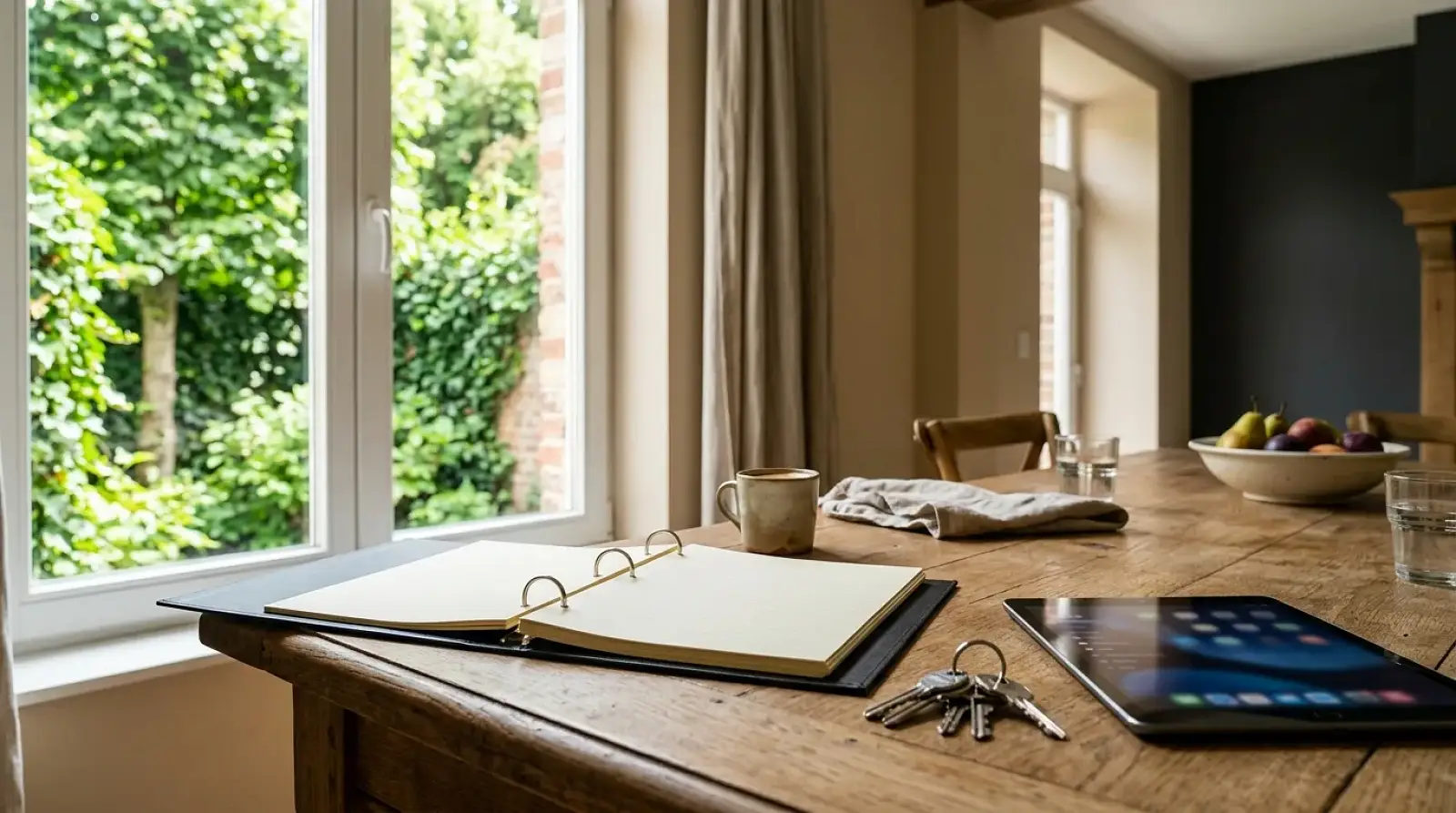
An apartment in Bruges, a second home on the coast or a holiday house in the West Flanders hinterland can generate a nice rental income. Yet successful holiday letting does not start with putting an Airbnb listing online. First the zoning, safety, administration and daily operations need to be in order.
That sounds like a lot, but with the right order it stays manageable. This step-by-step plan helps you start your holiday home in Flanders correctly and professionally. Rules can change and municipalities apply their own requirements. Always check the current information with Toerisme Vlaanderen (Visit Flanders) and with the municipality where the property is located.
Start with the property's zoning
Before investing in furniture, photos or software, check whether tourist letting is permitted at the location. Under the basic standards of the Flemish Logiesdecreet (accommodation decree), tourist accommodation must meet zoning rules and hold the necessary permits. Toerisme Vlaanderen explicitly refers to the local planning department for this.
That local conversation matters. The rules for an apartment in an urban setting can differ from those for a detached holiday home. For an apartment, also check the deed of division, the co-ownership regulations and any agreements within the owners' association. Permission from the building does not replace municipal requirements, and vice versa.
Ask the municipality specifically what zoning the property has, whether a change of use is required and which local taxes, registrations or operating conditions apply. Keep answers and documents in one place. That prevents you discovering only after launch that an essential element is missing.
Register your tourist accommodation
Anyone letting to tourists for payment in Flanders must register the accommodation with Toerisme Vlaanderen. That obligation also applies when you only let occasionally, via Airbnb, Booking.com or another channel.
For the online registration you need, among other things, your electronic ID card, the operator's details and the accommodation's details. After a correct online registration you receive a registration number and the property is added to the accommodation register. Registration does not replace other obligations: fire safety, insurance, quality and zoning still apply separately.
Build one launch folder with at least the ownership or lease document, the registration number, insurance documents, technical certificates, the municipality's contact details and the details of the person responsible on a daily basis.
Arrange the correct fire safety certificate
Every tourist accommodation must meet specific fire safety standards. Which procedure and standards apply depends on the type of accommodation, the number of rental units, capacity and the building's structural situation.
Toerisme Vlaanderen always treats a holiday home as one rental unit, regardless of the number of bedrooms. Every holiday home needs its own individual fire safety certificate. For small-scale accommodation the inspection runs through the designated body; for larger accommodation the application usually starts with the municipality or emergency response zone.
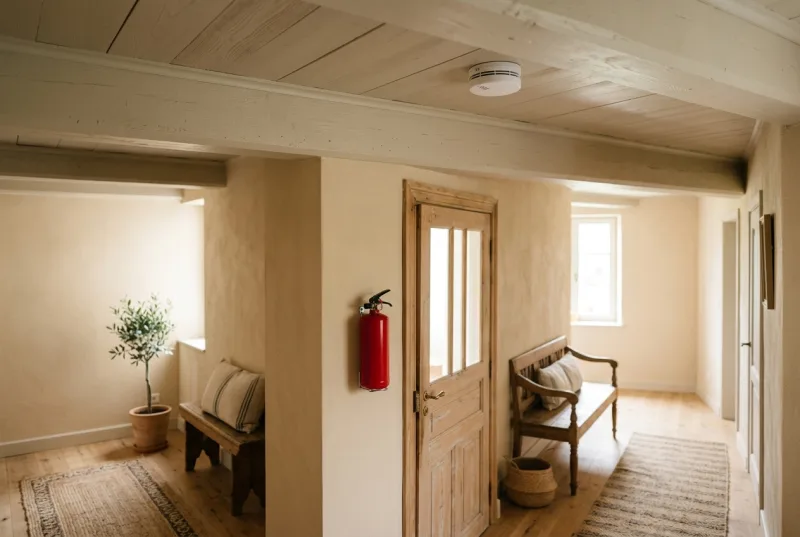
Do not wait for this until the first booking. An inspection can require technical documents or changes. Think of smoke detection, escape routes, electrical installations, heating and fire extinguishers. A certificate A gives the green light. A temporary certificate B can allow operation under conditions. With a negative certificate C the accommodation may not be operated until a new certificate A or B is issued.
Arrange insurance and accurate information
The Flemish basic standards require fire insurance and public liability insurance for the accommodation and the operation. Explicitly report the tourist letting to your insurer. An ordinary home policy does not automatically cover every situation that can arise with paying guests.
Communication about the property must also be truthful. Describe capacity, stairs, parking options, accessibility and amenities as they really are. An exaggerated listing may generate more clicks in the short term, but leads later to disappointment, complaints and weaker reviews.
Make the property genuinely guest-ready
An attractive interior is only one part of a guest-ready property. Guests expect a sensibly equipped kitchen, decent beds, sufficient lighting, reliable wifi, working heating, clear waste instructions and smooth access.
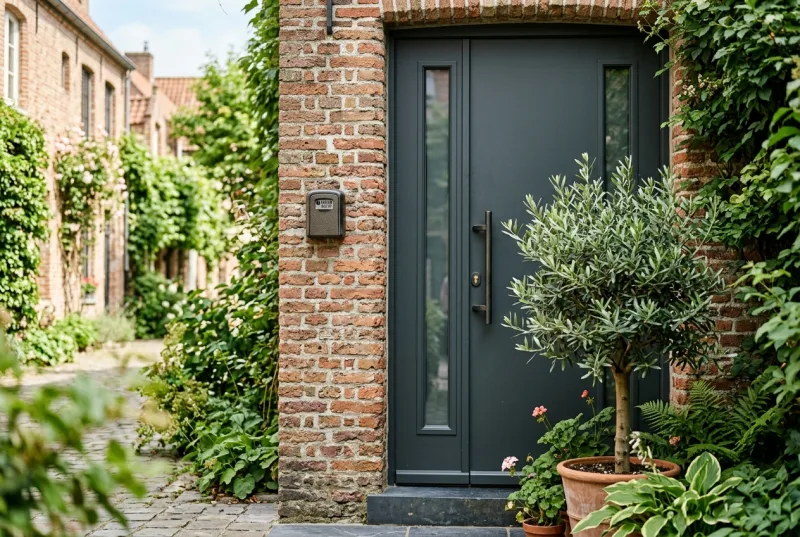
Walk through the entire guest journey yourself before the first booking. Can you find the property in the dark? Is the key procedure unambiguous? Does a foreign guest know how the appliances work? Are emergency numbers and house rules easy to find? A digital guest guide can bring all that information together and reduces the number of repeat questions.
Also set up an inventory and a maintenance schedule. Note serial numbers, warranty dates and fixed checks. Small defects quickly become big problems in holiday letting when new guests arrive the same day.
Choose channels, prices and house rules
Airbnb can be a good starting channel, but not every target group searches on the same platform. Booking.com, Vrbo, Expedia, Google Vacation Rentals and direct bookings can each play a different role. Multiple channels do require central calendar and price management to avoid double bookings.
Do not start with one fixed nightly rate for the whole year either. Demand changes with season, weekends, school holidays, events and remaining availability. In Bruges demand is spread more evenly across the year; on the coast it is more sensitive to season and weather. Also set minimum stays, cancellation terms, arrival windows and rules for your own use.
Organise communication, cleaning and checks
The real workload of holiday letting often only becomes visible after the first bookings. Guests ask questions in the evening and at weekends. Cleaning has to fit exactly between departure and arrival. Linen, consumables, waste and minor damage have to be followed up without inconveniencing the next guest.
Work with standard messages for booking, arrival and departure, but leave room for personal replies. Use a fixed checklist for every changeover and finish with a quality check. A turnover is only complete when the property is clean and fully restocked, has been technically checked and the finished state has been recorded with photos.
Track the numbers and adjust
Do not just measure occupancy. Also track the average nightly rate, revenue per available night, channel costs, cleaning costs, maintenance, cancellations and net income. A full calendar at too-low prices can be less attractive than a slightly lower occupancy with a better result and less wear.
Review each month which periods book slowly, which photos or texts raise questions and which comments recur in reviews. Good holiday letting is not a one-off launch, but a process of continuous improvement.
Manage it yourself or bring in support?
Managing it yourself can work well when you live nearby, are flexibly available and enjoy pricing, communication and operational follow-up. Outsourcing becomes attractive as soon as availability, cleaning schedules or revenue optimisation take too much time, or when you manage the property remotely.
Guestflow supports owners in Bruges, on the Belgian coast and in West Flanders. You can outsource just the guest changeover or choose full rental management, see our packages. We first look at the property, your goals and how much you want to keep doing yourself. You can read how that works under our approach.
Frequently asked questions
Do I need to register my holiday home if I only let it for a few weeks a year?
Yes. Toerisme Vlaanderen explicitly states that the registration requirement also applies to temporary or occasional letting for payment.
Is registration with Toerisme Vlaanderen the same as a permit?
No. Registration exists alongside planning, municipal, fire safety, insurance and tax obligations.
Does every holiday home need its own fire safety certificate?
Yes. According to Toerisme Vlaanderen, a holiday home counts as one rental unit, and every holiday home needs an individual certificate.
Can Guestflow take over the entire launch?
Guestflow can analyse the property, structure the operational launch and organise day-to-day rental management. Formal permits and certificates remain linked to the owner or operator, but we help you keep the right steps and information organised.